
Start with the kind of turn-based combat you enjoy
Wasteland 3 is the strongest starting point here if you want tactical battles connected to difficult role-playing decisions. Choose Pillars of Eternity II: Deadfire for a large fantasy party campaign, The Bard's Tale IV: Director's Cut for puzzles alongside party combat, or For The King II for adventures designed around replaying and adapting. The best choice depends on what you want to do between turns as much as what happens during a fight.
This guide focuses on RPGs with deliberate turn-based combat. It does not treat every strategy game as an RPG, or assume that every RPG with turns removes all pressure. A game can let you choose an ability from a menu and still demand a timed dodge, parry, or button press when the attack happens. If your reason for choosing the genre is to avoid reflex demands, look at the actual combat description rather than the genre tag alone.
It also helps to distinguish a tactical party RPG from a game whose main attraction is a sequence of tactical missions. Character development appears in both, but an RPG may give more space to conversations, exploration, and decisions outside battle. Neither approach is inherently better. The relevant question is whether you want a world to inhabit or mainly a series of problems to solve with a team.
- For consequential decisions: prioritize Wasteland 3, where party customization sits alongside ethical and political complications.
- For fantasy character building: consider Deadfire, especially if learning a substantial set of abilities sounds enjoyable.
- For dungeon exploration and puzzles: try The Bard's Tale IV, which gives the party more to do than win encounters.
- For a tabletop-style evening: consider For The King II, provided your group accepts uncertainty and setbacks.
These are editorial choices based on the games' structures, not a numerical ranking drawn from sales or player counts. inXile's Wasteland 3 overview and the official Bard's Tale IV feature illustrate how differently turn-based RPGs can use their time outside combat. The recommendations below explain the practical tradeoffs instead of promising that one game suits every player.
Access notes use U.S. listings checked on October 17, 2026. An old launch announcement establishes when a game arrived, but it cannot prove that your membership still includes the same edition today. Check the device-specific entries below before subscribing. If you discover that you prefer immediate action to turn-by-turn planning, the broader Game Pass recommendations directory is a better place to choose your next game.
Wasteland 3 for tactical freedom and difficult choices
Wasteland 3 is a good first choice when you want battles to belong to a larger RPG campaign. Your Desert Rangers enter Colorado seeking help for Arizona, and the people offering that help have demands of their own. Conversations and faction decisions give the squad's actions a context beyond winning the next encounter. The setting is harsh, and the choices often involve compromises rather than an obvious answer that satisfies everyone.
The attraction for a turn-based player is the chance to assess the field before committing. inXile's official overview identifies environmental dangers and vehicles alongside its turn-based system. Look at the situation as a whole instead of treating each character's strongest attack as the automatic move. The most interesting question can be how one action changes the options available to the rest of the squad.
That makes it a stronger recommendation for players who enjoy preparation than for those who want a fast, mostly automatic sequence of fights. Its dialogue and world decisions also deserve attention. If you want to concentrate almost entirely on battles, a mission-focused tactics game may fit better. If you want your tactical party to have an identity in a reactive world, Wasteland 3 supplies a clear reason to stay with the campaign.
Build a team with different jobs
Start by giving each member a recognizable purpose. A team is easier to understand when you can explain what each person contributes in a sentence. That does not mean copying a rigid build. It means noticing whether several characters are competing to solve the same problem while another useful role is missing. Review the group as a system before assuming that one disappointing encounter requires restarting everyone.
Before a difficult turn, ask three questions: what could hurt the squad most, what can you change about that threat, and which character should act first to make the rest more effective? This is a general planning habit rather than a claim that every encounter has a single correct sequence. It encourages you to use the time that turn-based combat provides instead of clicking through actions and only examining the consequences afterward.
Wasteland 3 supports a solo campaign and optional two-player online co-op. You can therefore choose it for the RPG itself without organizing another person. For subscription access, the console edition lists Premium and Ultimate on Xbox One and Series X|S. The Windows edition also lists PC Game Pass. These are separate product pages, and the Colorado Collection is a different bundle with extra content. The site's Wasteland 3 catalog entry is a convenient place to revisit its console route before installing.
Two fantasy RPGs for players who enjoy learning systems
Deadfire and The Bard's Tale IV reward a different kind of patience from an action RPG. You spend time understanding what the party can do, then use those capabilities to solve problems. Their fantasy settings are part of the appeal, but the stronger reason to choose either is that you enjoy learning a system well enough to make your own decisions within it.
Pillars of Eternity II: Deadfire in turn-based mode
Deadfire is the choice for a substantial companion-driven adventure with a detailed character-building system. Its pursuit of the god Eothas takes your party through an archipelago, with room for exploration and decisions along the way. The console Ultimate Edition listing explicitly includes both turn-based combat and the original real-time-with-pause mode, so you can select the rhythm that suits you.
Turn-based mode is useful when you want to understand each party member's contribution without monitoring several simultaneous actions. It does not remove the underlying complexity. You still need to read abilities and think about how the group works. Start with a party whose jobs make sense to you, then expand your ambitions as the interactions become familiar. Choosing the most complicated class combination immediately can obscure why a battle went well or badly.
Obsidian's mode explanation describes selecting the combat format when starting a new game. Try the early encounters before settling into a long campaign, and do not assume that you can freely swap modes whenever you want. Turn-by-turn deliberation is the benefit, but it can also make routine encounters feel longer if your real preference is to move quickly through exploration.
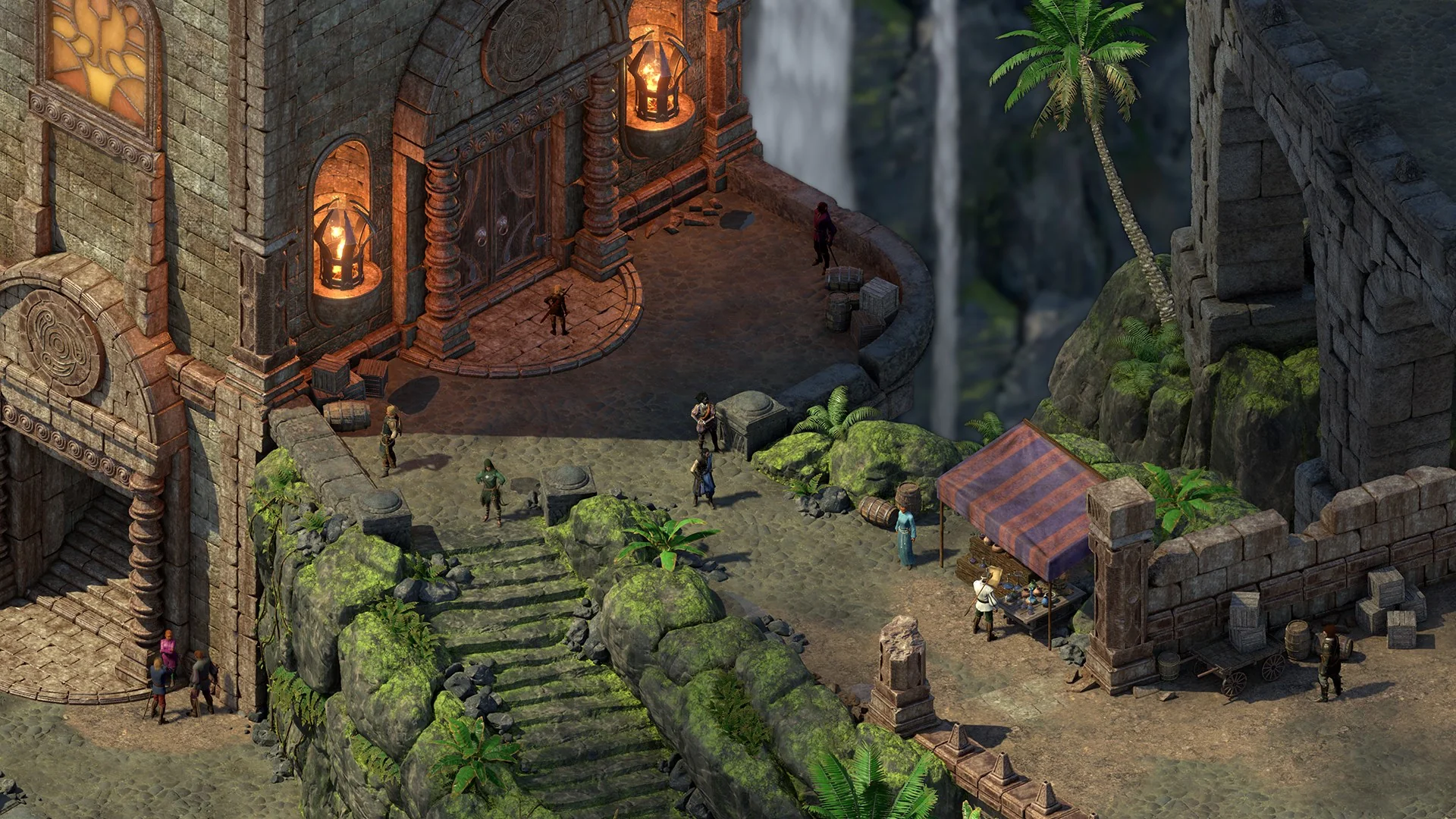
The console Ultimate Edition supports Xbox One and Series X|S and is included with Premium and Ultimate as checked. Its major expansions are part of that edition. The title's “Ultimate” does not mean only Game Pass Ultimate members can access it. Windows uses a separate product listing, which should be checked on its own before installation.
The Bard's Tale IV: Director's Cut for puzzle-minded parties
The Bard's Tale IV suits someone who wants exploration and problem solving to continue outside combat. Its party travels through towns and dungeons, while riddles, traps, and puzzle elements provide another kind of obstacle. Positioning and combinations matter in its tactical battles. Choose it when examining an environment and working out a solution sounds as rewarding as winning the next fight.
A useful approach is to slow down before reaching for a walkthrough. Identify what the puzzle is asking you to notice, test one idea, and keep track of the result. That creates a satisfying connection between your understanding of a place and your progress through it. If puzzles feel like barriers between the battles you actually want, Wasteland 3 is likely a better fit for this shortlist.
The Director's Cut listing includes options for saves, navigation aids, and other preferences, making the settings worth reviewing before starting. It lists Xbox One, Series X|S, and PC, with Premium, PC Game Pass, and Ultimate subscription routes. Select this exact title: similarly named Bard's Tale releases can have different gameplay. The plan guide can help compare memberships once you know the edition you want.
For The King II for repeatable adventures with friends or alone
For The King II is the recommendation when you want a turn-based RPG to feel like an adventure shared around a table. Its procedural maps and dice-inspired outcomes introduce uncertainty, while party equipment and positioning give you ways to respond. You can play alone and control the party, or bring friends into a campaign where deciding what to do next becomes part of the entertainment.
Its main difference from the other picks is the attitude it asks you to bring. A setback is part of a game built for repeated attempts and adaptation. That can be enjoyable when your group likes telling stories about a plan that went wrong. It can be frustrating when everyone expects steady progress toward a predetermined ending. Choose it for the process of managing an unpredictable adventure, not because the tabletop presentation makes it look automatically easy.
The official listing describes a battle grid where movement and placement affect combat. That makes formation worth discussing before everyone focuses on damage. Look at what your position protects, what it exposes, and how a different arrangement could help the next character. Treat a failed attempt as information about the whole plan rather than proof that one unlucky character caused the problem.
For a first session with friends, agree on how you want to make decisions. Some groups enjoy a careful discussion before every move. Others would rather let each player take responsibility and accept the consequences. Both can work, but mixing those expectations can turn a cooperative RPG into one person directing everyone else's turn. Ask before giving detailed advice, and give the player taking an action room to understand its result.
Solo play changes the appeal rather than removing it. You have complete control over the party's decisions and can think through the sequence at your own pace. The tradeoff is that you also carry all the planning yourself. If coordinating several roles is what you enjoy, that is a benefit. If the social negotiation was the attraction, schedule a group session instead of expecting the solo experience to recreate it.
IronOak's official introduction explains its blend of tabletop and roguelite design. The current Store page lists solo play, local and online co-op for two to four players, Xbox One, Series X|S, and PC. It names Premium, PC Game Pass, and Ultimate, while separately selling bundles and character packs. Check the For The King II catalog entry and your exact platform before gathering a group, so the evening begins with compatible access rather than a surprise purchase decision.
Match the game to your device, membership and available time
For this shortlist, the main subscription distinction is between the console route and the Windows route. The checked console listings name Premium and Ultimate. The Windows listings name Premium, PC Game Pass, and Ultimate. That does not make the plans interchangeable for every other game, and it does not establish Essential access. Filter for the game and device you will actually use before changing a subscription.
| Game | Best reason to choose it | Edition detail to remember |
|---|---|---|
| Wasteland 3 | Tactical planning linked to difficult decisions | Console and PC use separate listings; Colorado Collection adds content |
| Pillars of Eternity II: Deadfire | A large fantasy party campaign in turn-based mode | Ultimate Edition is the game bundle; select combat mode when starting |
| The Bard's Tale IV: Director's Cut | Puzzles and exploration alongside party battles | Select Director's Cut, rather than another Bard's Tale game |
| For The King II | Adaptable solo or group tabletop adventures | Additional character packs and bundles are separately offered |
Deadfire is a useful example of why the exact listing matters. Its Windows Ultimate Edition has its own subscription information. A console product page alone would not establish that PC route. The official library filters let you narrow the service by membership and device, which is more reliable than treating the words “on Game Pass” as a complete installation instruction.
Once installed, spend your first session checking the things that will affect every later one. Can you comfortably read the interface on your display? Do you understand how to inspect abilities and save your progress? Does the game give you the decision pace you wanted? Turning down a difficulty setting can help you learn a system, but it will not transform a puzzle-heavy adventure into a combat-only game. Choose the structure you enjoy before worrying about mastery.
Consider attention as well as available hours. A story-rich RPG rewards remembering people and promises; a team-building game rewards remembering why you assigned particular roles. Leave yourself a short note when taking a break. For a cooperative campaign, agree on a stopping point and who will return for the next session. Turns give you thinking time inside a battle, but they do not automatically make an entire campaign easy to fit into a busy calendar.
Finally, check the leaving-soon page before starting a long project. If a game departs, a compatible base-game purchase may be necessary to continue; buying an expansion alone is not the same thing. Pick the adventure whose decisions you want to spend time making, and let that preference guide the commitment rather than the size of a promotional hour count.
Comments
Comments are reviewed before publication. Please keep the conversation helpful and on topic.
Sign in with Google to leave a comment.
Loading comments…